At NESTech, CAE forms the cornerstone of our digital engineering capabilities, with 25+ years of experience empowering mechanical engineering industries worldwide. We replace traditional trial-and-error approaches with comprehensive simulation solutions that optimize product performance, reduce development time by up to 40%, and minimize physical prototyping costs. Our end-to-end virtual product development services - from structural and thermal analysis to CFD simulations and final validation - enable clients to bring safer, more efficient products to market faster.
Accelerates product development by reducing dependence on costly and time-consuming physical prototypes.
Enhances design accuracy through predictive simulation of structural, thermal, vibrational, and fatigue behavior.
Reduces failure risk by identifying potential issues before they manifest in real-world conditions.
Improves product quality and compliance with global engineering standards.
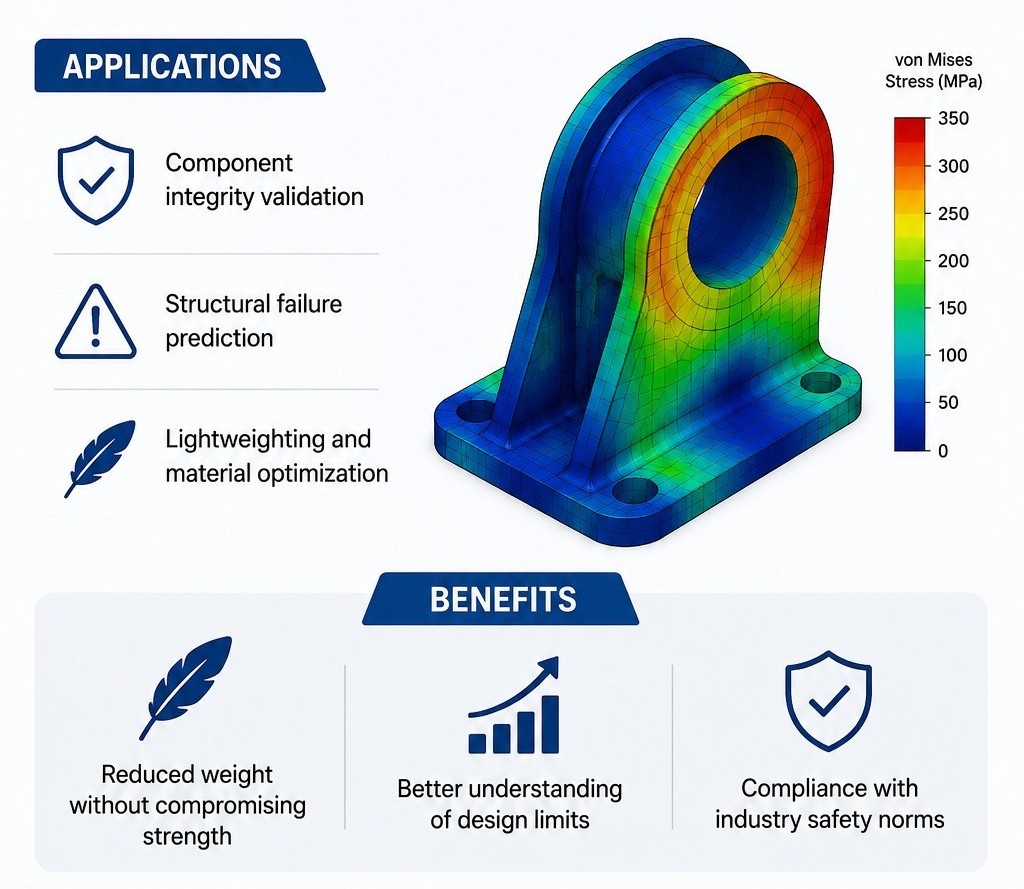
Our structural FEA services ensure that your components and assemblies can withstand operational and extreme conditions. We simulate various load scenarios to evaluate stresses, deformations, and safety factors.
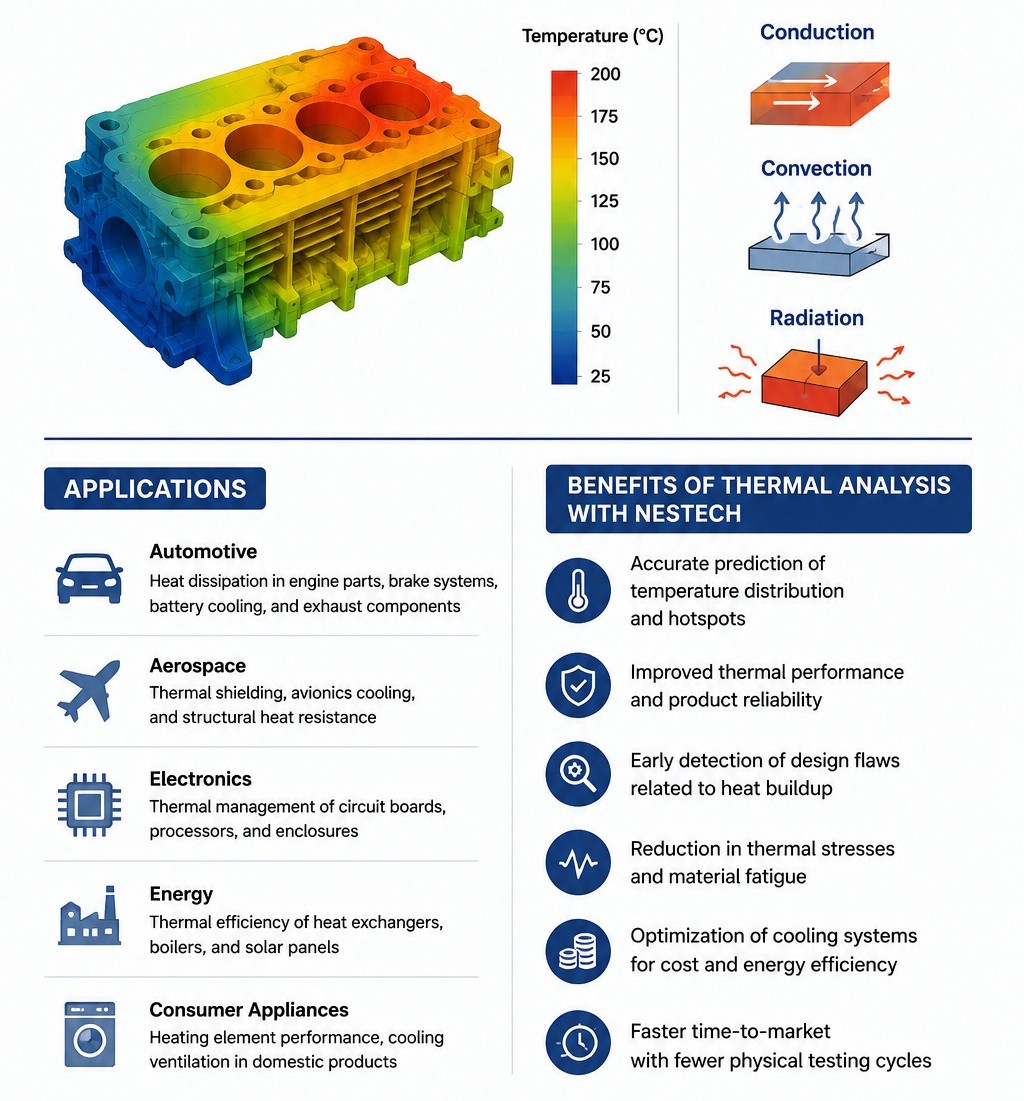
Thermal Analysis involves the study of heat transfer within and between materials and systems due to conduction, convection, and radiation. NESTech uses thermal simulations to predict temperature distribution, thermal stresses, and deformation in components under various loading and environmental conditions. This analysis is critical for ensuring materials and components can withstand thermal loads during operation without failure or performance degradation.
NESTech's Thermal Analysis services are applied in a wide range of industries, including:
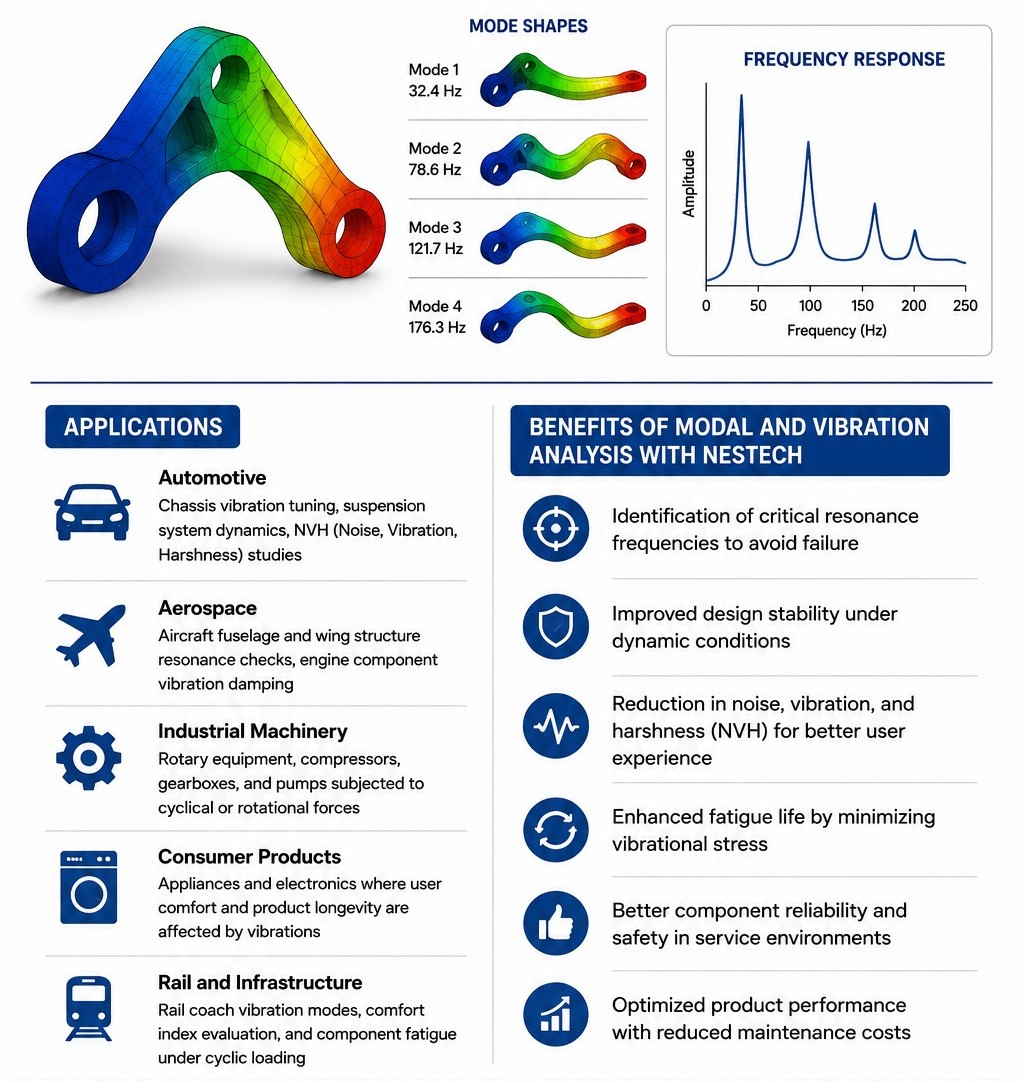
Modal and Vibration Analysis focuses on evaluating the dynamic behavior of structures under vibrational loads. Modal analysis identifies a structure's natural frequencies, mode shapes, and damping characteristics. Vibration analysis extends this to understand how a component responds to harmonic, random, or transient vibrations. At NESTech, we use advanced simulation tools to analyze vibrations at both component and system levels, ensuring designs are free from resonance-related failures and perform reliably in dynamic environments.
Our Modal and Vibration Analysis services are widely applied in:
Benefits of Modal and Vibration Analysis with NESTech:
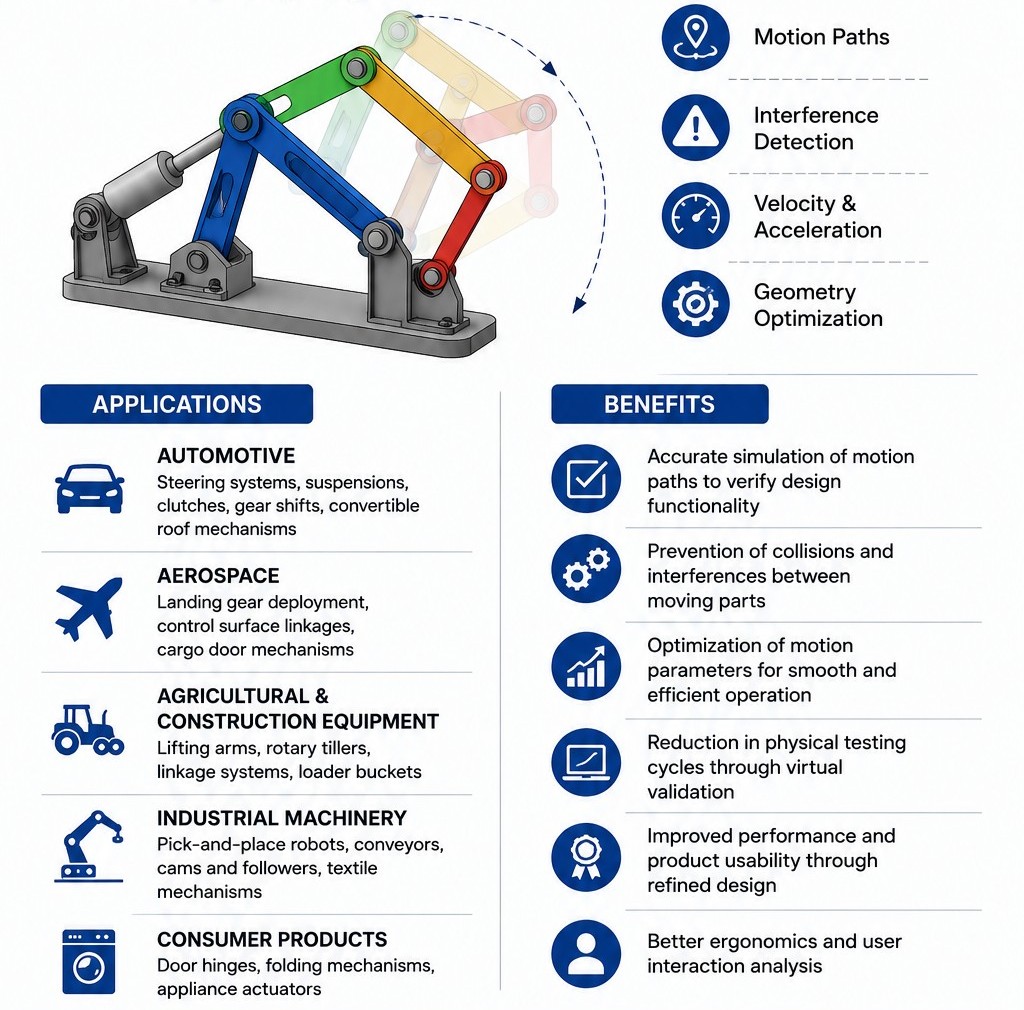
Kinematic and Mechanism Analysis involves studying the motion of mechanical systems without considering the forces that cause them. It focuses on the relative movement between components-such as velocity, acceleration, displacement, and angular motion-ensuring that a mechanism functions smoothly and efficiently within its operational limits. At NESTech, we use multi-body dynamics tools to model and analyze mechanisms from simple linkages to complex assemblies like suspension systems and robotic arms. This analysis is essential in the early design phase to validate movement paths, identify interferences, and optimize geometry.
Our Kinematics and Mechanism Analysis services support clients in a variety of industries:
Benefits of Kinematic and Mechanism Analysis with NESTech:
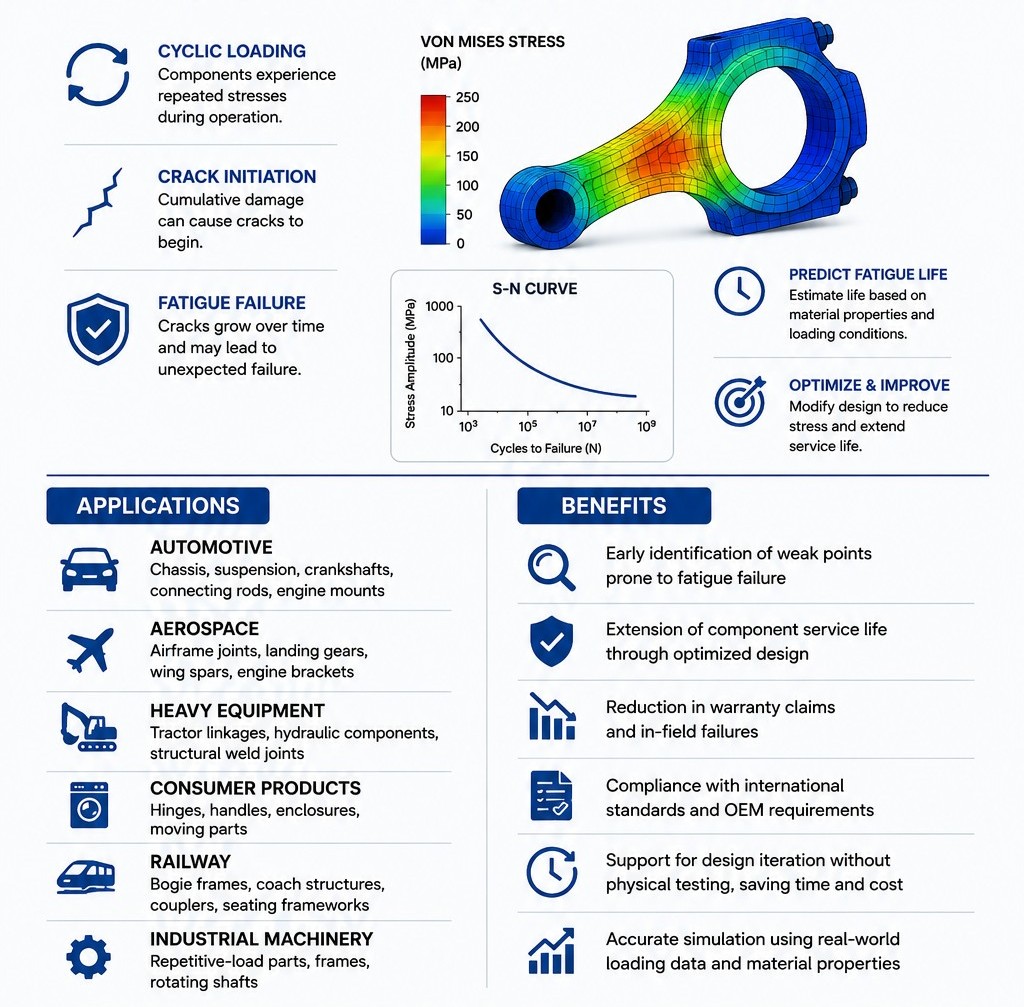
Fatigue and Durability Analysis is critical for evaluating how components and structures perform over time under repeated loading conditions. Unlike static analysis, fatigue focuses on the cumulative damage caused by cyclic stresses, which can lead to crack initiation and eventual failure-even when the stress levels are below material yield strength. At NESTech, we use industry-standard tools and methodologies to predict fatigue life, identify high-risk areas, and suggest design modifications to enhance product longevity. Our analysis supports both high-cycle and low-cycle fatigue scenarios, incorporating variable loading conditions, environmental factors, and material behavior.
NESTech offers fatigue and durability analysis across multiple sectors, including:
Benefits of Fatigue and Durability Analysis with NESTech:
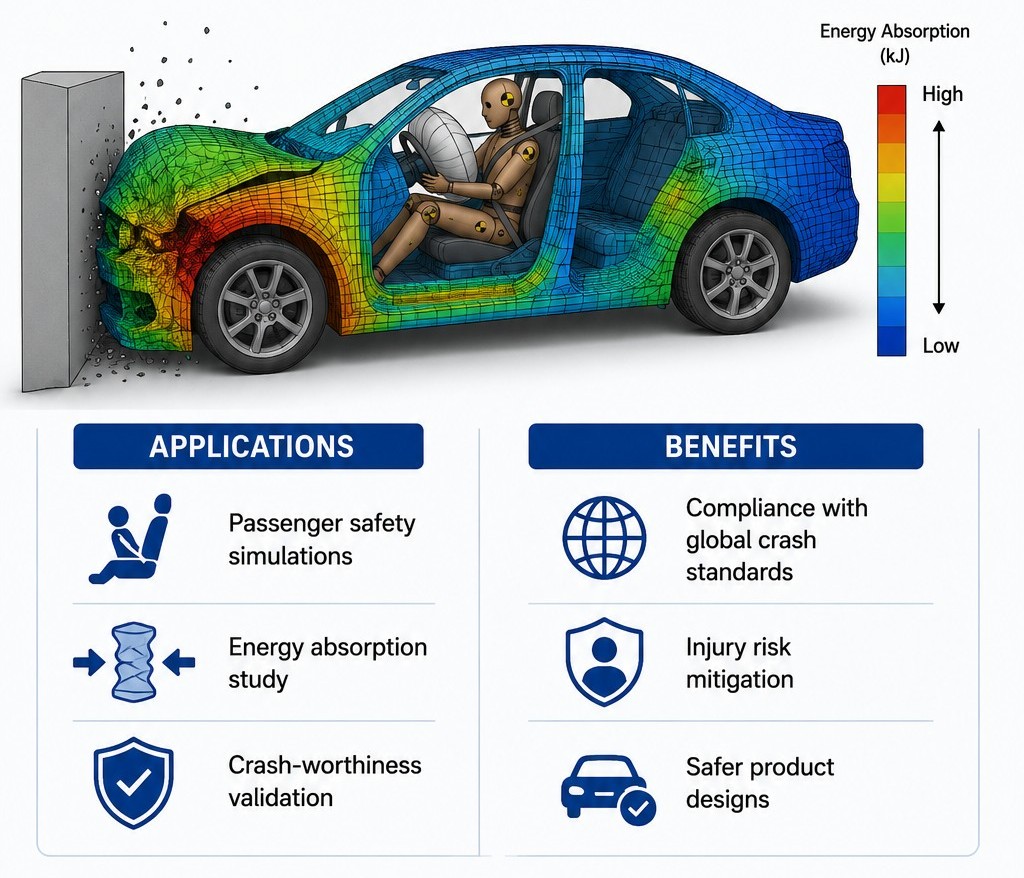
We simulate high-impact events to evaluate safety and energy absorption characteristics. Useful in automotive, rail, and defense sectors.
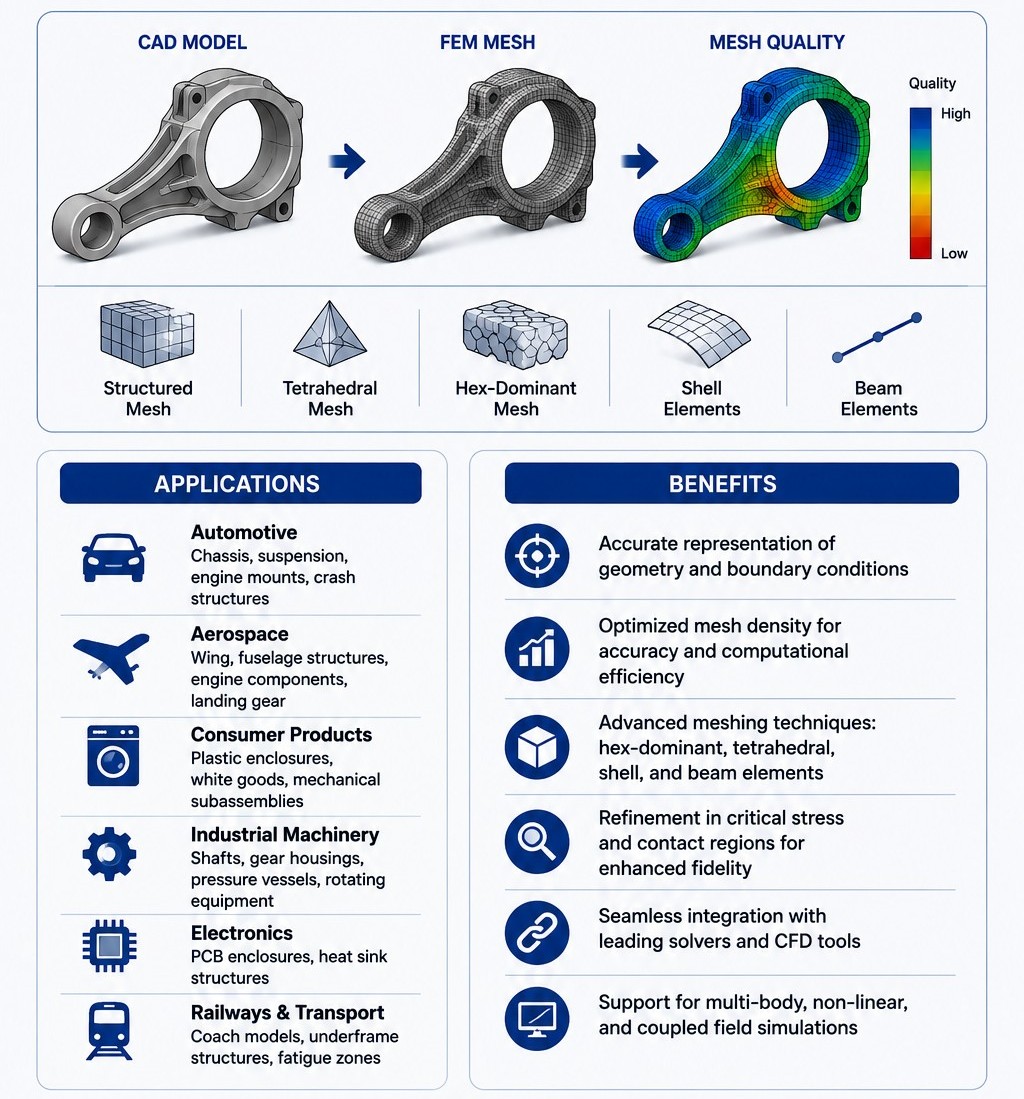
Finite Element Method (FEM) Mesh Generation is a foundational step in any simulation process, where a complex geometry is divided into smaller, manageable elements to accurately simulate physical behavior under various conditions. At NESTech, we specialize in creating high-quality structured and unstructured meshes for a variety of mechanical components. Our expert engineers ensure optimal element quality, density, and refinement in critical regions to balance simulation accuracy and computational efficiency. The mesh quality directly influences the precision of results in structural, thermal, fatigue, crash, and CFD simulations.
NESTech provides meshing services across a wide range of industries and analysis types, including:
Benefits of FEM Meshing with NESTech:
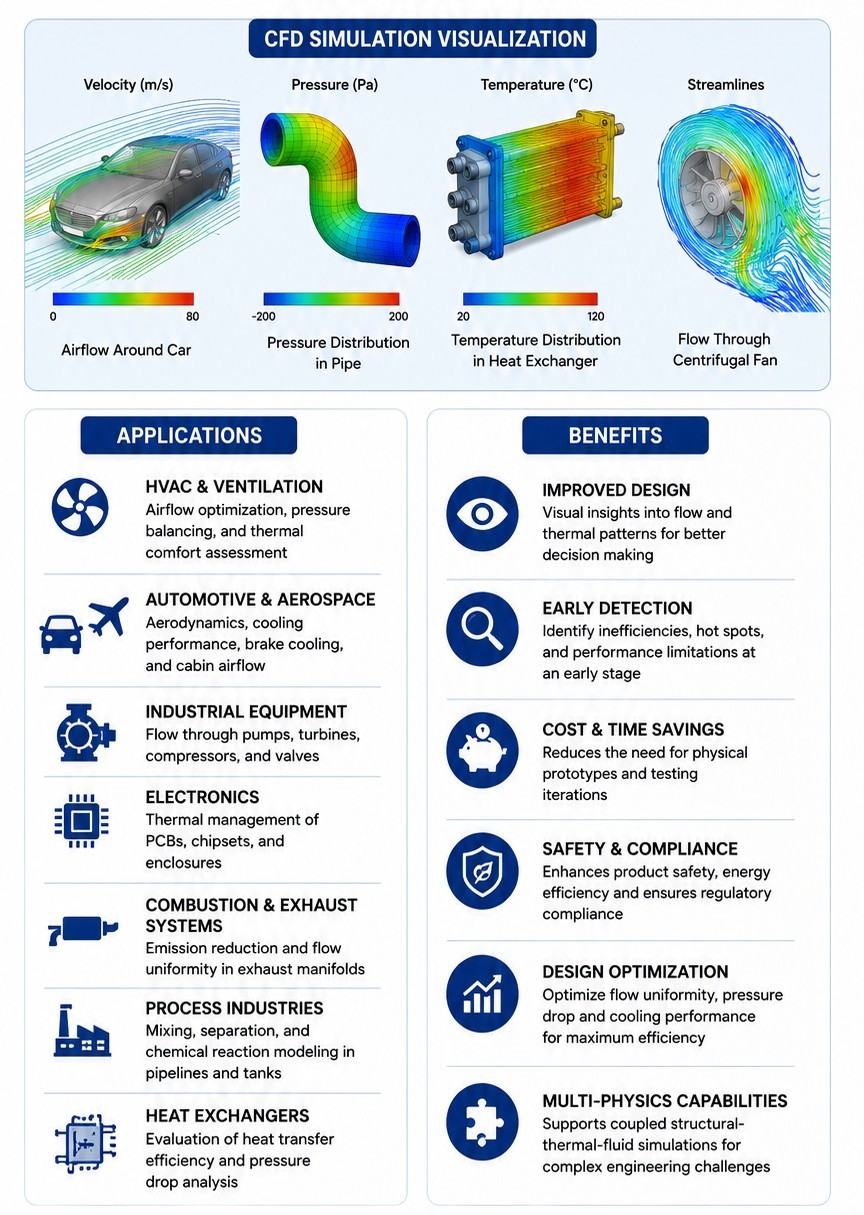
Computational Fluid Dynamics (CFD) is a simulation technique that uses numerical analysis and algorithms to solve and analyze problems involving fluid flows and heat transfer. At NESTech, we leverage CFD to model the behavior of liquids and gases across a wide range of operating conditions. This includes laminar and turbulent flows, compressible and incompressible fluids, as well as conjugate heat transfer between solids and fluids. By virtually replicating real-world scenarios, CFD allows engineers to visualize flow patterns, pressure distributions, temperature gradients, and more-long before a physical prototype is built.
NESTech provides CFD simulation services for a variety of industrial applications, including:
Benefits of CFD Analysis at NESTech:
...and many more across automotive, industrial, aerospace, and consumer sectors.
Comprehensive engineering simulation solutions across key industries
| Industry | Key Applications | Analysis Types |
|---|---|---|
| Automotive |
|
|
| Aerospace |
|
|
| Industrial Equipment |
|
|
| Consumer Products |
|
|
| Medical Devices |
|
|
| Energy & Oil & Gas |
|
|
| Electronics |
|
|
| Marine |
|
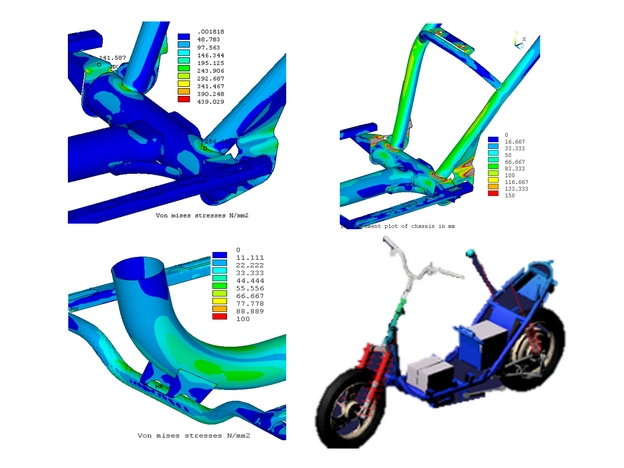
Structural analysis done for the 2 wheeler frame design for better weight reduction and design optimization
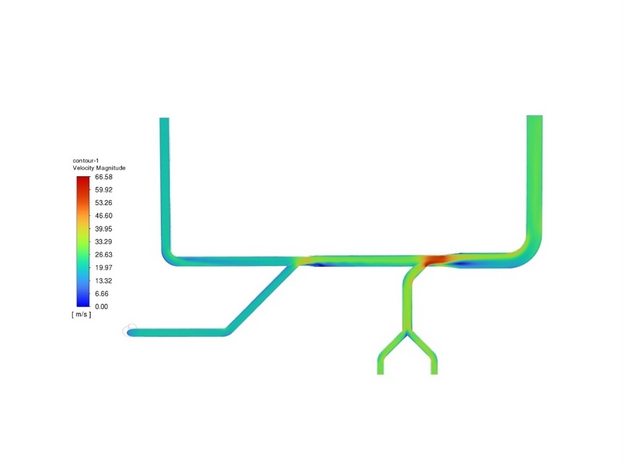
Velocity at the sucking point in the waste sorting pipe line is caculated and design optimized for better pressure drop
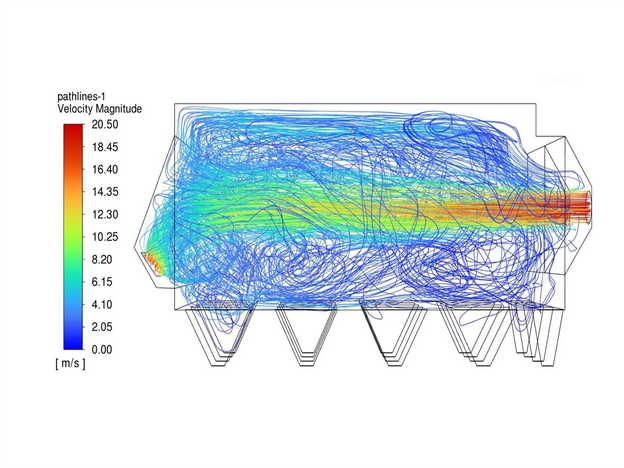
CFD showed significant recirculation zones present in the given model. Flow optimization study was done to improve the fluid flow.
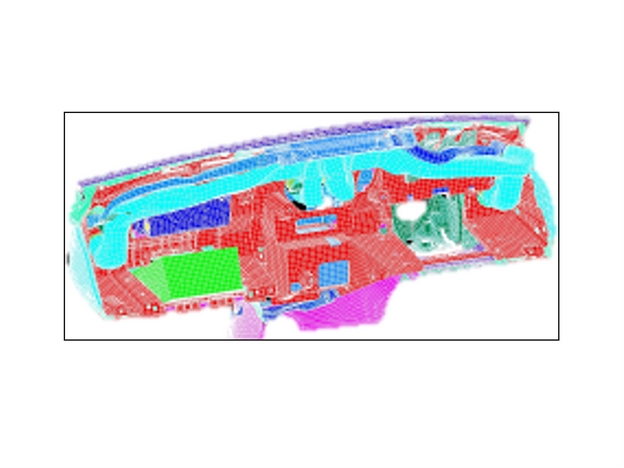
4 wheeler dash board is analysed for the effect of crash loading conditions, design optimized for better safety conditions.